
Facility managers who search for how to install metal roofing usually aren’t planning to pick up tools and start fastening panels. More often, they’re trying to understand the process of having it installed on their building, how disruptive it will be, what decisions actually matter, and where projects tend to go sideways.
On commercial properties, metal roof installation isn’t just a simple process. It’s a coordination effort that involves managing the structure, drainage, materials, and long-term maintenance needs. Knowing what’s involved helps managers plan realistically instead of reacting mid-project.
Table of Contents
- Why Choose Metal Roofing for Commercial Buildings
- What “Installation” Means in a Commercial Setting
- Panels, Profiles, and Why They Matter
- Edges, Trim, and Water Control
- Movement, Heat, and Expansion
- Underlayment and Existing Conditions
- Penetrations and Transitions
- Don’t DIY It
- What Facility Managers Should Focus On
- Why Commercial Experience Matters
- What to Expect From a Professional Installation
Why Choose Metal Roofing for Commercial Buildings
A metal roof expands, contracts, sheds water fast, and handles exposure well—especially in California climates where sun and heat are constant factors.
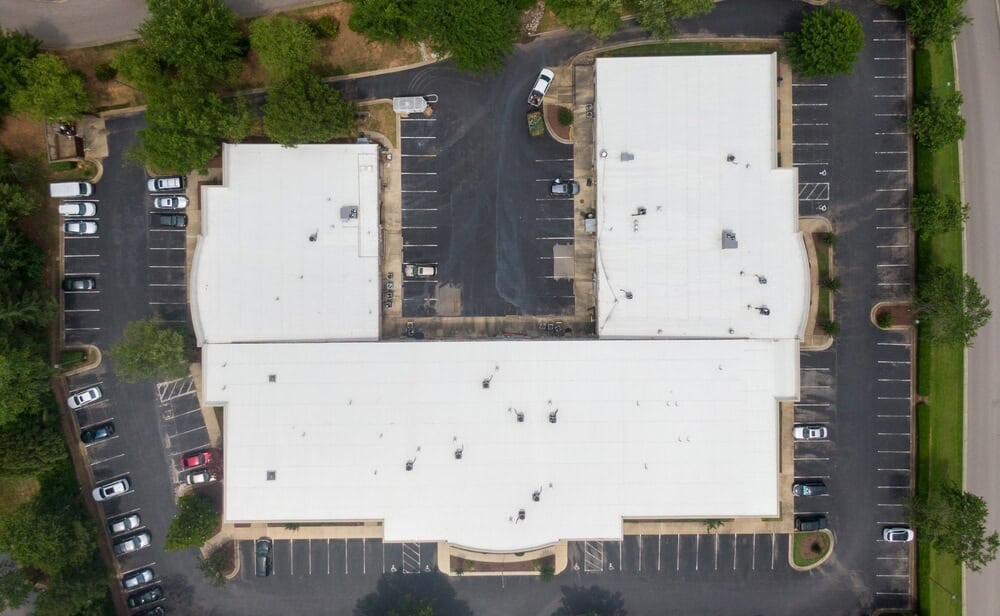
Commercial buildings use metal because it works at the scale commercial buildings require. Long spans, fewer seams, and durable, repeatable metal roof panels make sense on warehouses, manufacturing facilities, and institutional buildings.
What “Installation” Means in a Commercial Setting
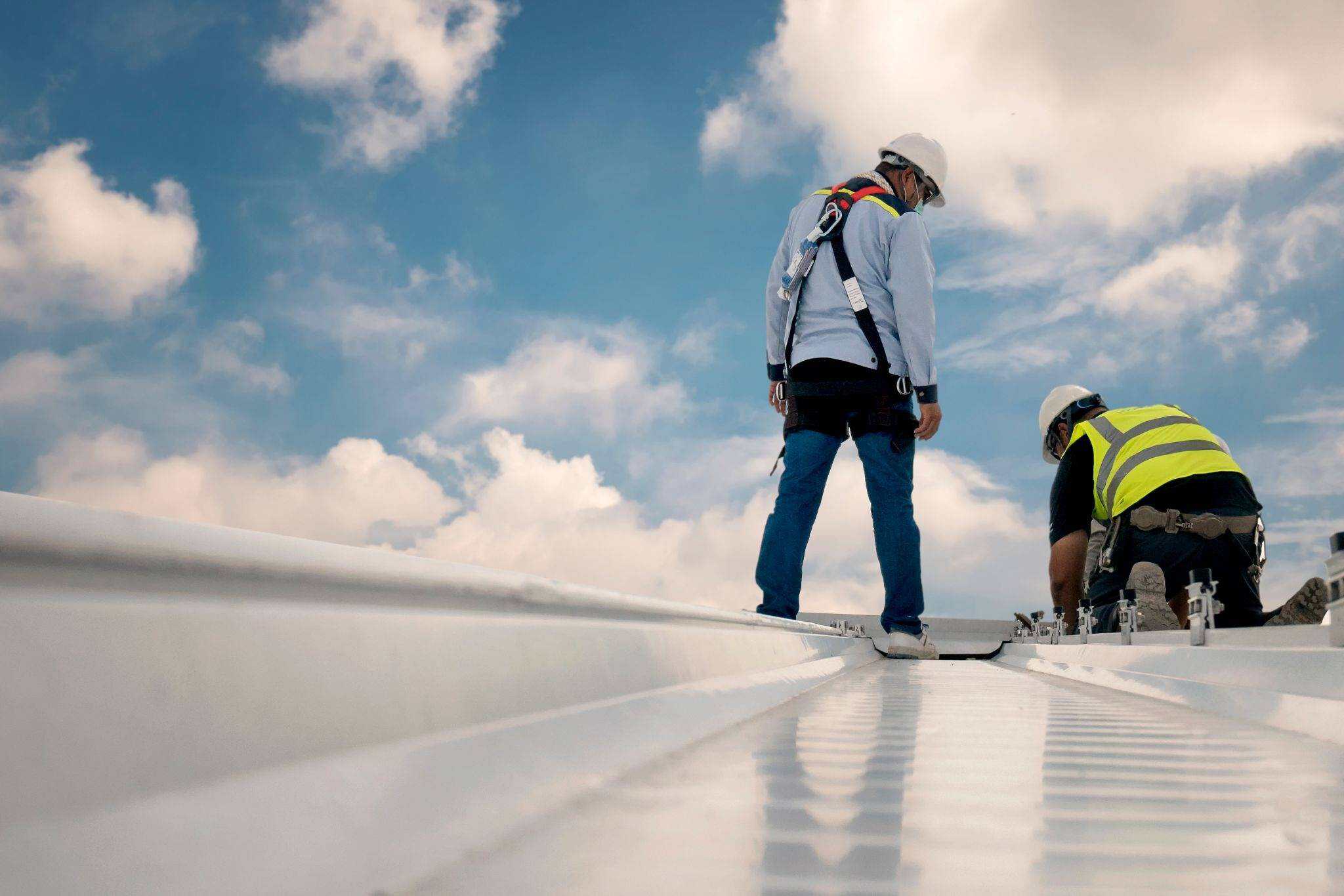
When contractors talk about installing metal roofing, they’re not describing a single task or event. They’re talking about a sequence of decisions and checks that happen over days or weeks, depending on the size of the facility and the scope of the job.
A typical commercial roof installation includes layout planning, material staging, deck prep, and constant adjustments as panels go down. The first panel matters more than most people realize, as it can throw off the rest of the roof if not installed properly. Nothing is rushed, and nothing is random. Or at least, it shouldn’t be.
Panels, Profiles, and Why They Matter
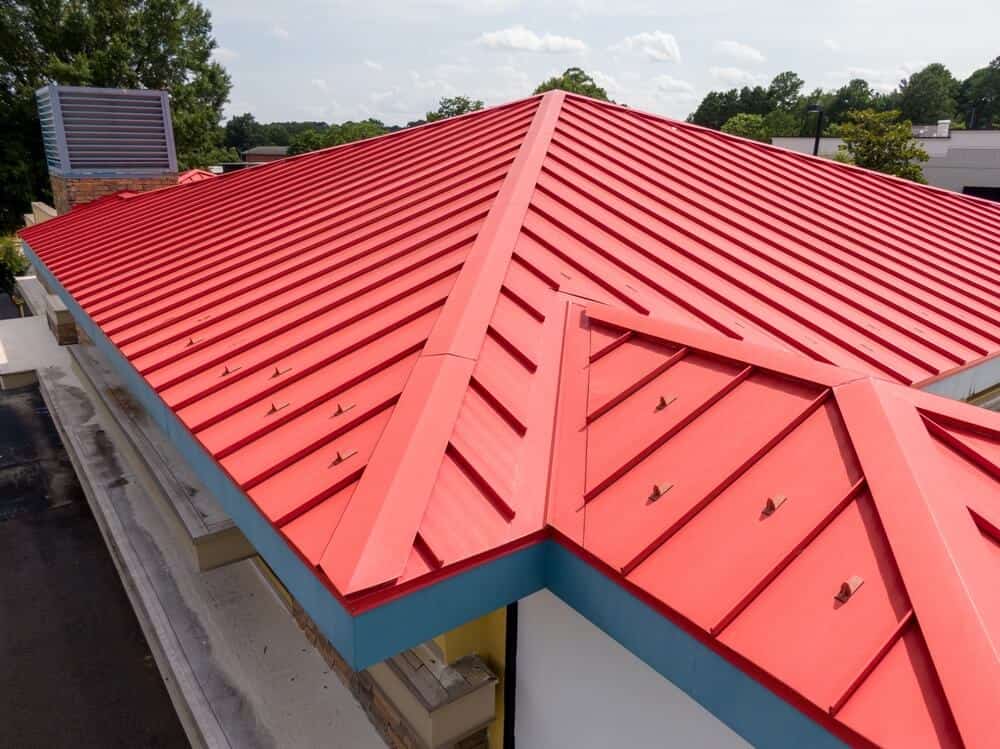
Not all metal panels are the same. Panel profile, rib height, seam design, and length all affect how the roof performs. Some systems use standing seam panels with concealed fasteners. Others rely on exposed fasteners that remain visible after installation. Each approach changes how the roof handles movement, water, and maintenance.
It’s also important to understand that roof pitch may impact style choice. Low-slope roofs are often better protected by concealed fasteners. Water doesn’t shed as quickly on these roofs, and the lack of exposed fasteners provides better overall protection.
Edges, Trim, and Water Control
Water doesn’t fail roofs—poor detailing that lets that water penetrate the building does. At the perimeter, eave trim, drip edge, and other trim components manage runoff. These areas see the most stress and are often where leaks first appear.
Closure strips, butyl tape, and compatible sealant are used to close gaps without locking the system in place. The goal is to seal the roof while still letting it move.
This is also where experience shows. Crews that rush edges usually come back later to fix leaks.

Movement, Heat, and Expansion
Despite its tremendous durability, metal will always move. As heat builds during the day, panels expand. At night, they contract. Systems are designed for this, but only if they’re installed correctly. Panels may need to be laid flat in certain assemblies or allowed to float within clips. If movement is restricted, seams open. If seams open, leaks follow.
This is also why cutting matters. Poorly cut panels, exposed edges, or damaged coatings invite corrosion and, eventually, rust.
Underlayment and Existing Conditions
Some commercial projects involve installing a new roof over an old roof. Others require a full tear-off. This is often dictated by local building codes or the roof’s condition, not preference.
The underlayment protects the deck and the underside of the metal panels. It’s not visible when the job is done, but it matters more than people think. Skipping or rushing this step creates long-term risk.
Penetrations and Transitions
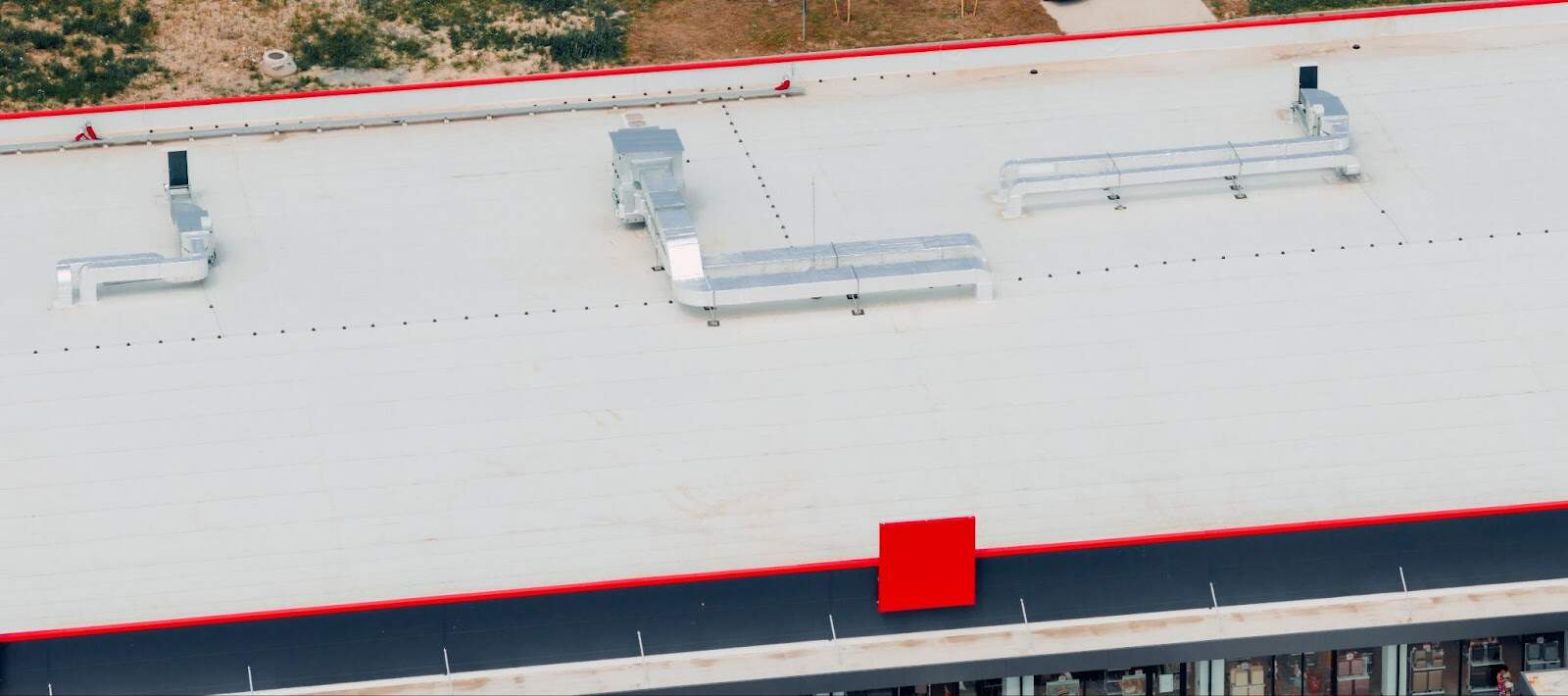
Every penetration is a liability. They’re all potential leaks. Vents, skylights, and mechanical curbs all require detailing that integrate with the panel layout. Panels may be bent, wrapped, or left partially exposed to create proper drainage paths.
This work involves sharp edges, specialized tools, and careful measuring. Mistakes here don’t usually show up right away, but they’re expensive later.

Don’t DIY It
Facility managers sometimes ask whether parts of the work can be handled in-house. Unless you have a crew experienced in metal roofing installation, the answer is no.
Commercial metal roof installation involves heavy panels, precise fastening, and safety risks. It’s not comparable to residential projects or siding work. And, the cost of fixing mistakes far outweighs the cost of doing it right the first time.
What Facility Managers Should Focus On
You don’t need to know how to actually install metal roofing. You need to know what questions to ask:
- How will the work affect operations below?
- How are seams, edges, and penetrations handled?
- What maintenance will the new metal roof require?
- How will leaks be prevented long-term?
Good contractors provide clear installation resources, documentation, and communication throughout the process.
Why Commercial Experience Matters
Metal roofing on commercial buildings is a different discipline than standard commercial roofing or residential work. Panel layout, fastening patterns, and edge conditions scale up quickly. AAA Roofing installs metal systems on commercial facilities across California and understands how metal, panels, fasteners, and trim work together over decades—not just at installation.
What to Expect From a Professional Installation
With almost 4 decades of experience and a reputation as a trusted contractor for commercial properties and industry leaders, AAA Roofing delivers commercial metal roof installations built for performance, longevity, and code compliance. If you’re planning a metal roof project or evaluating an existing system, contact AAA Roofing to schedule a commercial roof evaluation.