
Most commercial buildings in California have something in common: wide roof spans, constant sun exposure, and steady thermal movement as temperatures rise and fall. In this environment, many building owners turn to polyvinyl chloride (PVC) roofing systems, a type of single-ply membrane known for heat-welded seams and long-term durability.
If you manage one or more commercial buildings, or you’re comparing options with your roofing consultants, it helps to know what PVC roofing systems offer and what the installation process looks like.
Table of Contents
- What Makes PVC Roofing Systems Different
- Why California Properties Stick With PVC Roofing
- Weather and Environment Tolerance
- Energy Savings
- Longevity on Flat Roofs
- How Contractors Install PVC Roofing on Commercial Buildings
- 1. Substrate Preparation
- 2. Fastening and Attachment
- 3. Metal Edge Details
- 4. Final Welding and Detailing
- PVC Roofing vs. TPO Membranes
- Maintenance and Long-Term Expectations
- Why Experienced Commercial Roofers Matter
- AAA Roofing: PVC Installation Experts for California’s Commercial Properties
What Makes PVC Roofing Systems Different
PVC roofing has been used for decades, and ongoing improvements in manufacturing have made today’s membranes stronger and more reliable than earlier versions. Once reinforced, the sheet holds up well under daily expansion, contraction, and rooftop activity common across commercial properties in California.
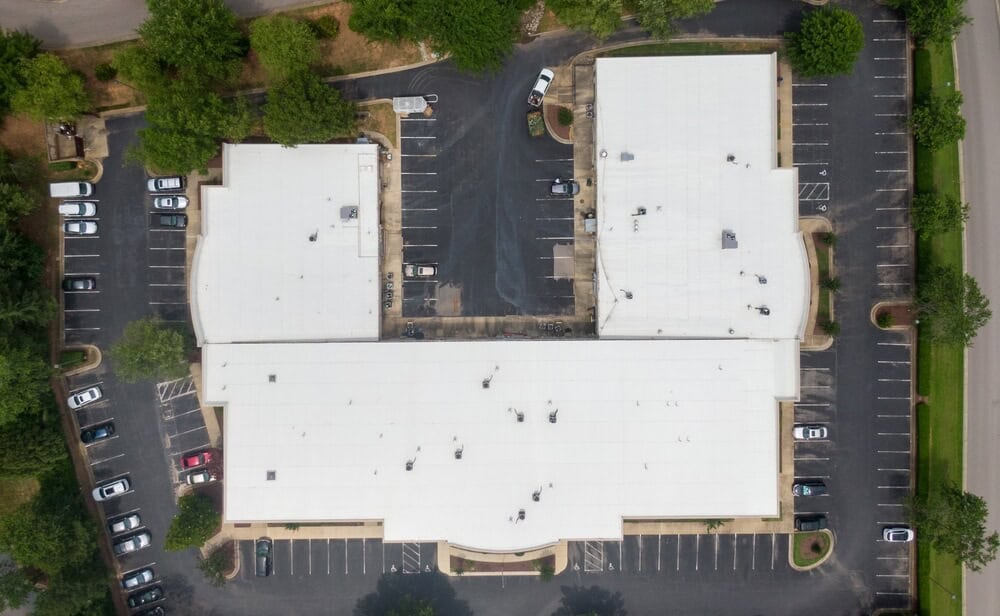
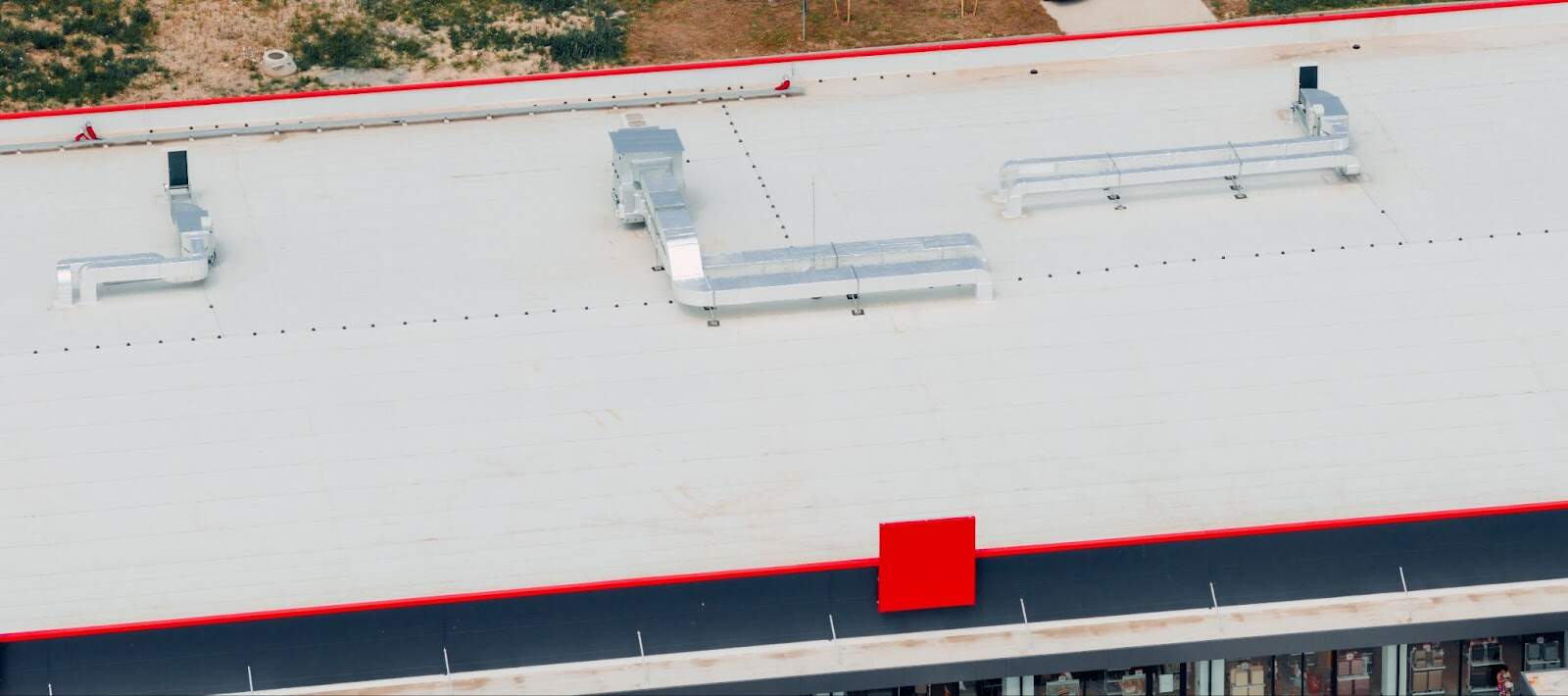
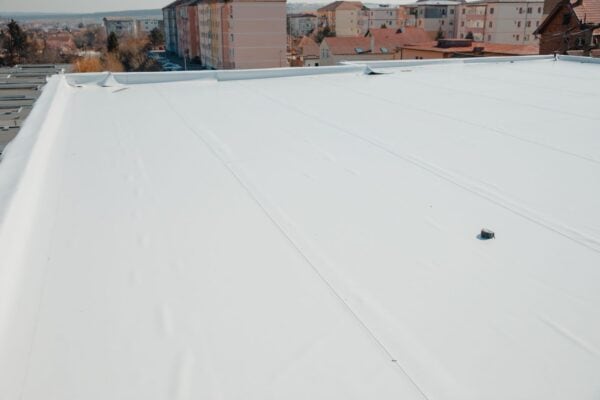
Most PVC membranes arrive with a smooth, white surface that reflects sunlight, making inspections straightforward because debris or damage is easier to spot. In a climate with constant UV exposure, that reflective finish helps the membrane stay cooler and maintain its performance over time.
Why California Properties Stick With PVC Roofing
If you ask five building owners why they selected PVC roofing, you’ll probably get five different answers. But, especially with high-traffic or high-heat roofs, there are a few common reasons.
Weather and Environment Tolerance
PVC membrane is known for superior resistance to heat, grease, chemicals, and standing water. In industrial settings or near coastal air, that resistance matters a lot more than people expect.
Energy Savings
White PVC reflects the sun’s rays to help reduce the cooling load inside the building. It’s not magic, but many facilities notice a significant improvement in energy efficiency.
Longevity on Flat Roofs
PVC simply performs well on flat roofs. Designed specifically for commercial buildings, PVC handles the movement and daily expansion that occur across large roof spans.
How Contractors Install PVC Roofing on Commercial Buildings
Although every project is different, most PVC installations follow a similar pattern. For California properties, especially those in warmer regions, preparation and fastening methods make or break the final result.
1. Substrate Preparation
Before a new roofing membrane can be installed, the crew evaluates the surface, checks for trapped moisture, and fixes any damaged decking or insulation. A smooth, stable base makes the rest of the install far easier.
2. Fastening and Attachment
This is where approaches start to differ. Some owners prefer a mechanically attached PVC membrane, while others prefer a ballasted system, with gravel or other material placed on top of the single-ply membrane to hold it down. Fully adhered systems are also an option, with PVC-compatible adhesive used instead of fasteners or ballast.
- Mechanically attached and mechanically fastened systems rely on fasteners and plates placed in rows.
- Ballasted systems weigh the membrane down to provide uplift protection without fastening to the deck.
- Fully-adhered membranes often outperform ballasted or attached roofing membranes in high wind areas.
Either method secures membrane edges and field sheets against wind uplift. A cover strip is often used to reinforce transitions and plate rows, adding another layer of uplift protection.
3. Metal Edge Details
To finish the perimeter, contractors install flat metal edging or coated metal trim. These pieces help the membrane lock into place and provide a predictable path for water off the roof.
4. Final Welding and Detailing
Heat-welded seams, flashings, and penetrations set PVC apart. A well-welded sheet behaves like a continuous surface, and when fleece backing is part of the design, that added cushion helps create smooth transitions and better adhesion in specific assemblies.
PVC Roofing vs. TPO Membranes
Both PVC and thermoplastic polyolefin (TPO) membranes are popular options for commercial roofs in California. TPO is known for cost-effectiveness and good reflectivity, while PVC brings stronger chemical resistance and more predictable weld strength. For restaurants, manufacturing facilities, distribution centers, or any property with rooftop exhaust, PVC provides dependable protection that owners tend to appreciate.
Maintenance and Long-Term Expectations
Maintenance is pretty simple as long as a PVC membrane is installed correctly. Regular inspections look for debris around drains, any separation at flashings, any storm damage or tears, and the condition of welded seams. With routine maintenance, a PVC roof can last for decades, especially in California’s dry climate.
These inspections also help owners budget accurately. Because PVC behaves consistently, you can usually tell whether a repair or partial replacement will be needed long before the problem becomes disruptive.
Why Experienced Commercial Roofers Matter
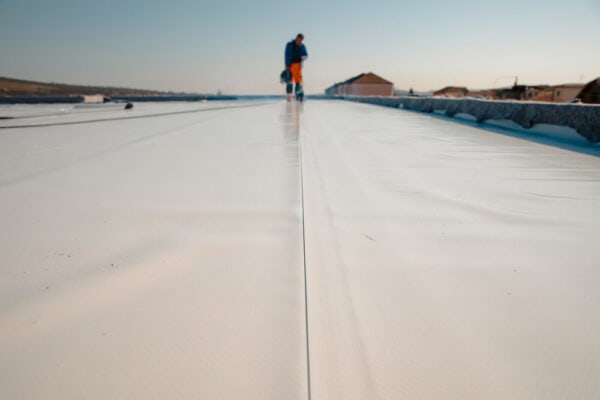
Although PVC is one of the most forgiving roofing materials, it still requires a trained crew. The heat-welding, plate layout, and edge metalwork must be precise, and commercial buildings often involve more detail than people realize. A team that installs both PVC and TPO every week will spot things that generalists might miss.
AAA Roofing installs a complete line of commercial systems and understands the small details—edge securement, coated metal transitions, and rooftop conditions—that decide how long a membrane will last.
AAA Roofing: PVC Installation Experts for California’s Commercial Properties
With 36 years of experience and a reputation as a trusted contractor for commercial buildings, AAA Roofing provides dependable service in replacements, repairs, maintenance, and emergency leak response.
Our team works with PVC, TPO, modified bitumen, and other commercial systems, giving property managers a partner who can keep their roofs performing under demanding conditions for years to come. If you’re considering PVC for a new installation or evaluating an older system, we can help. Contact us for a commercial roof evaluation.