

When owners start looking into commercial metal roofing costs, their first instinct is to compare numbers per square foot with other roofing materials. This is a reasonable starting point, but it rarely tells the whole story. On commercial buildings, the panel system, structure underneath it, and the condition of the existing roof usually matter more than the surface material alone.
Some projects move quickly because the deck is clean and accessible. Others take longer because equipment, transitions, or insulation conditions need to be addressed first. Those differences are what shape the total cost of a new metal roof more than simply the square footage.
Understanding how those variables come together makes it easier to decide whether metal roofing is the right direction for your building.
Table of Contents
- Why Metal Roofing Costs Vary From One Building to Another
- The Type of Metal Roofing Materials Makes a Difference
- Panel Profile Changes the Installation
- How Metal Roofs Compare With Traditional Roofing Materials
- Installation Conditions Often Matter More Than Material Selection
- Energy Performance and Long-Term Use
- Metal Roofing Alternatives
- When a Metal Roof Is Worth the Cost on a Commercial Building
- Get a Metal Roofing Cost Assessment From AAA Roofing
Why Metal Roofing Costs Vary From One Building to Another
Two buildings with the same square footage can end up with very different installation scopes and costs. The layout alone changes how crews move across the roof.
Large open structures are usually more straightforward. Facilities with repeated penetrations, equipment rails, or elevation changes take more time to detail. That extra work affects both installation costs and labor costs, even when the same metal panels are used on both buildings.
The condition of the existing roof deck also plays a large role. If the existing deck is in good shape, less preparation is required before commercial metal roofing installation begins, directly reducing labor costs and keeping the project on schedule.
The Type of Metal Roofing Materials Makes a Difference
The metal itself is one of the first variables that affects commercial metal roofing cost. The most common options for commercial buildings are galvanized steel and aluminum, each with different performance profiles and price points. The panel profile and attachment method influence both performance expectations and construction sequencing.
- Galvanized steel holds up well across large roof areas without introducing specialty material costs.
- Aluminum panels are common in coastal environments or on buildings where corrosion exposure is a concern.
Generally speaking, galvanized steel is more affordable than aluminum, but each has its trade-offs. Other materials such as copper roofs and specialty metals exist as well, but they typically come at a higher cost and varying durability.
Panel Profile Changes the Installation
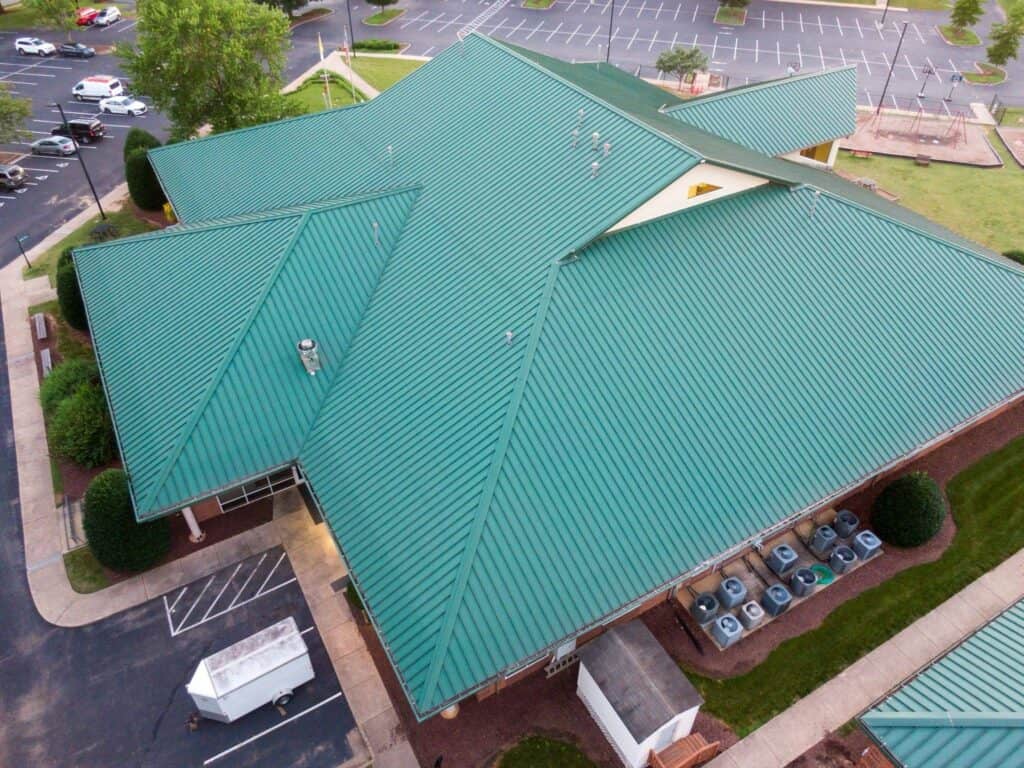
The panel profile matters as much as the metal itself. The right attachment method depends on the mechanical demands of the structure and the environmental conditions the roof will face.
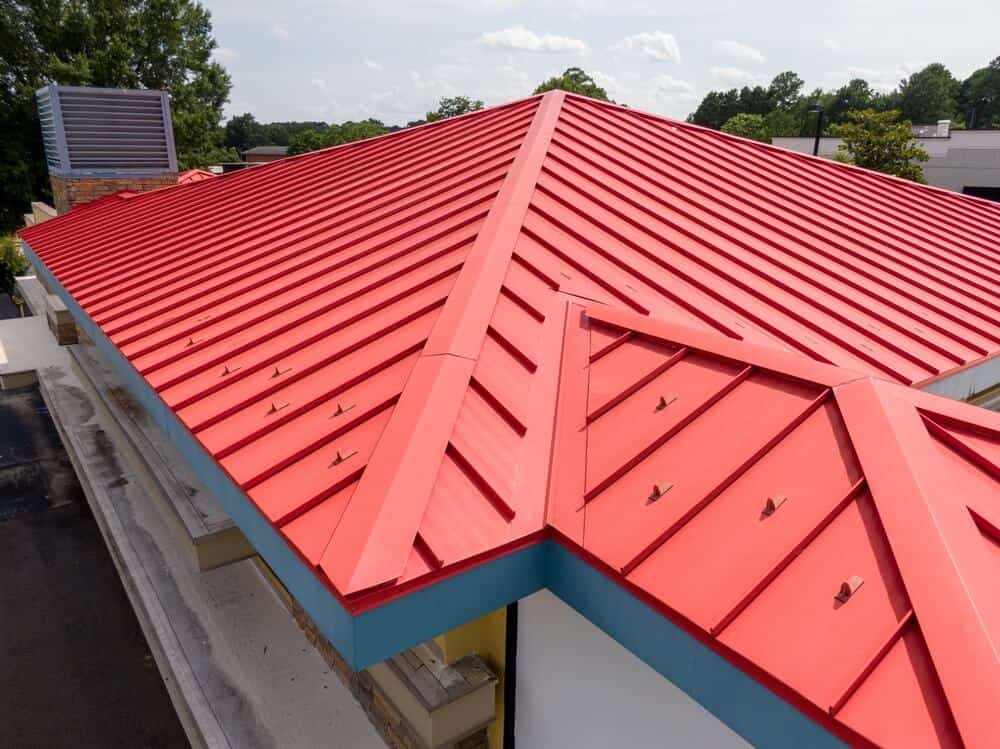
A standing seam metal roof locks panels together with concealed fasteners. This approach allows the system to move with temperature changes without stressing the attachment points. A standing seam roof typically costs more but offers superior durability and weatherproofing compared to a corrugated roof.
An exposed fastener panel installs differently. These systems rely on visible fasteners rather than concealed seams, which can simplify installation on some buildings. They’re common on certain commercial and industrial structures where speed of installation matters more than appearance.
Corrugated metal roofs still appear on certain retrofit projects as well. A corrugated metal layout is ideal for structures that already support that profile or projects where simplicity is a priority.
How Metal Roofs Compare With Traditional Roofing Materials
Commercial owners often evaluate metal roofing alongside single-ply membrane systems such as TPO, PVC, and EPDM before making a decision. Both are legitimate options for commercial buildings, but they perform differently depending on the structure and long-term priorities.
Membrane systems install efficiently across wide, low-slope roofs and often come in at a lower initial cost, especially when the existing roof is in good condition. Metal roofing systems typically carry a higher upfront scope, but are often selected when the owner is prioritizing:
- Long service life with minimal maintenance cycles
- High wind resistance across wide spans
- Reduced long-term replacement frequency
Investing in a metal roof is often more economical in the long term, as one metal roof can outlast multiple traditional asphalt shingle roofs. The right direction usually depends on how the building is used and what the owner expects from the roof over time.
Installation Conditions Often Matter More Than Material Selection
Even after the panel type is chosen, the structure itself still dictates how the project moves forward.
Transitions around equipment supports, perimeter connections, and drainage areas all affect installation sequencing. Installation sequencing on a clean commercial deck looks very different from a structure that requires preparation work before panels can go down.
Some buildings allow panels to be installed over certain sections of the existing roof, depending on conditions underneath. Others require removal before work, which can change both scheduling and total cost expectations.
Energy Performance and Long-Term Use
Another reason commercial owners consider metal for their commercial roof is the environmental characteristics of the system, which can save money over time. Some finishes used on metal roofs reflect sunlight while other roofing materials absorb heat. Over large roof areas, that difference can support increased energy efficiency inside the building and reduce the wear and tear on cooling equipment.
Durability is another factor. Many facilities often choose metal for its long service life. While every building is different, proper installation can make metal commercial roofs last as long as 50 years.
Metal Roofing Alternatives
Some owners compare metal roofs alongside single-ply systems like TPO, PVC, or EPDM before deciding what makes the most sense for their commercial building. Those membrane systems are often used on wide, low-slope roofs where installation moves quickly across open areas, and the structure is already set up for that type of assembly.
In many cases, those roofing systems come in at a lower initial scope than a metal roof, especially when the existing roof can remain in place. Buildings that prioritize long service life, wind resistance, or reduced maintenance cycles often lean toward metal. The right direction depends on how the roof is used and what the owner expects from it over time.
When a Metal Roof Is Worth the Cost on a Commercial Building
Metal isn’t always the right answer for every building, but it tends to make sense on buildings where durability and long-term performance matter more than keeping the initial scope as low as possible.
Owners often opt for metal roofing on their commercial building when they need a system that can:
- withstand high winds across wide spans
- support long service intervals with low maintenance
- improve building-level energy efficiency
On structures where those priorities align, many find that a new metal roof becomes the practical choice rather than just an upgrade.
Get a Metal Roofing Cost Assessment From AAA Roofing
Because every commercial structure is different, the best way to understand metal roofing cost is by getting in touch with a reliable roofing company.
With 36 years of experience and a reputation as a trusted contractor for national real estate firms and industry leaders, AAA Roofing provides dependable service in replacements, repairs, maintenance, and leak response, giving you confidence that your roofing projects are in the hands of professionals who build long-lasting, high-quality systems for schools and universities. AAA Roofing reviews the condition of the existing roof, evaluates panel options such as standing seam metal roof systems, and explains how layout and attachment method affect installation scope per square foot.
If you’re planning for a new roof installation or comparing metal with other roofing materials, AAA Roofing can help determine whether metal is the right fit for your building and your long-term maintenance goals.