
Most roofs don’t fail all at once. Years of extreme weather, rooftop mechanical operations, and daily foot traffic can wear out certain areas and pieces of the deck. Repairs that once held and protected the building no longer do the job. As this hidden damage grows, it can compile into a large-scale issue requiring a full roof replacement. This is where a property manager may ask: Can we keep repairing this, or is it time for a roof replacement?
There isn’t one specific moment where that decision becomes obvious. A variety of factors may play into whether a full replacement is necessary or beneficial for your roof’s lifespan. What is visible on some roofs and materials is not always visible on others. It’s critical to understand some of the most common signs that your roof demands a full replacement, and the next steps to take.
Table of Contents
- 5 Signs Your Commercial Roof Needs Replacement
- 1. Spreading Leaks
- 2. Heavy Visible Wear
- 3. Moisture Under the Membrane
- 4. Repeat or More Frequent Repairs
- 5. Not Knowing the Roof’s Age
- Cost of Commercial Roof Replacement
- Repair vs. Replacement: How to Decide What is Right For Your Roof
- Next Steps For Commercial Roof Replacement
- Get a Roof Replacement Assessment From AAA Roofing
5 Signs Your Commercial Roof Needs Replacement
If you believe your roof may need a complete replacement, it is important to work with a professional roofing company to understand your roof’s conditions and the best repair options. However, there are some signs to look for that can help determine if it’s time to take that first step in replacing your commercial roof.
1. Spreading Leaks
A singular leak on a commercial roof doesn’t always constitute an emergency or major restoration. In some cases, you can track it down, make necessary repairs, and move on. They’re inconvenient, but one leak doesn’t necessarily mean your roof needs to be replaced.
When leaks are appearing in multiple areas of the roof, it can indicate a deeper structural issue. Water doesn’t drop straight down through a roof system. It flows and travels along roofing decks, pipes, and other above-ceiling plumbing items. By the time it moves inside and affects internal function, that’s a sign that water has been moving for a while. If you’re calling for repairs in one area and a new spot opens up a few weeks later, that pattern usually means the system has deteriorated across the board.
If you’re bouncing between locations trying to stay ahead of it, you’re losing time and resources on repairs that may not last. Consistent or spreading leaks are usually a sign that the existing roof is dealing with more than just one puncture or tear, and it may be time for a roof replacement.
2. Heavy Visible Wear
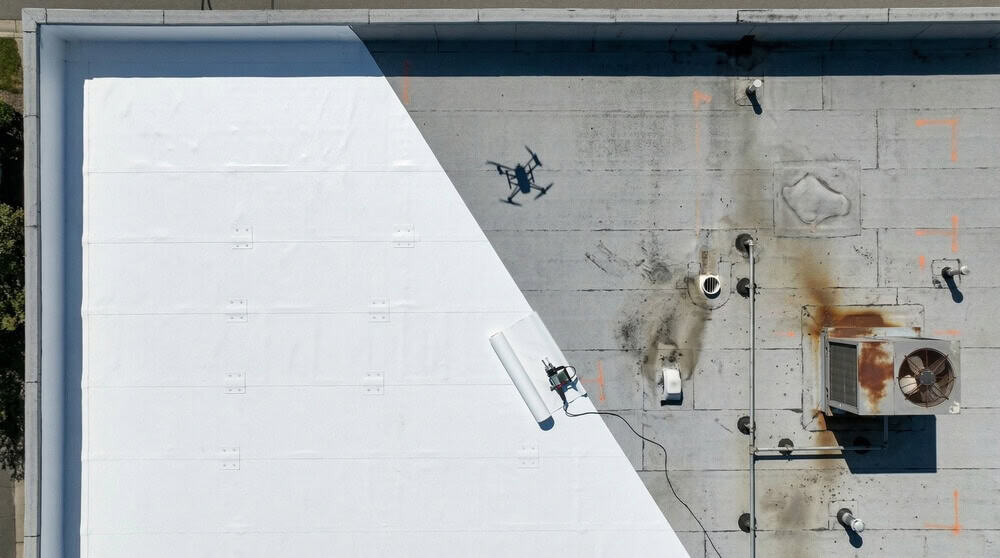
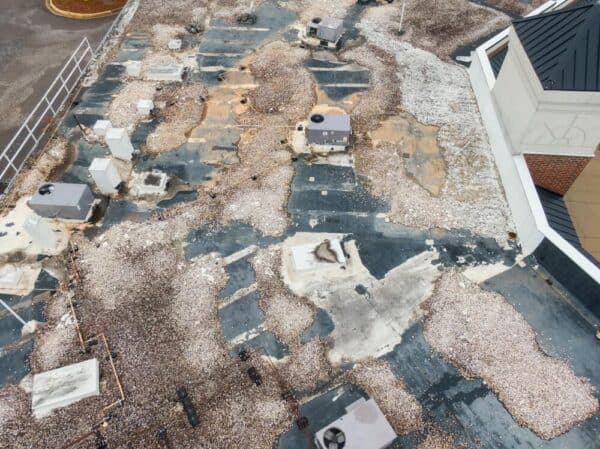
Most damage on commercial roofs are not visible from the ground. Once you’re up close, heavy wear-and-tear can indicate years of unattended damage. Seams start separating in small areas. Fasteners don’t sit tight. You might notice sections where the roof’s surface just doesn’t look the same as the rest.
The following visible changes may be indicative of an underlying issue:
- Widespread curling
- Cracking
- Rust
- Change in color
- Decreased reflectivity
- Standing water
- Large punctures or tears
- Damaged seams or fasteners
A few punctures throughout the lifespan of a roof can be easily repaired, but constant maintenance and restoration can add up. In these cases, a total roof repair may be more beneficial for your commercial building, economically and structurally.
That doesn’t automatically mean you need a full roof replacement right away. But if visible wear is appearing in more than one area, rather than just a corner or detail, it usually means the system is aging across the entire roof, not just in one spot. At that point, repairs become more about managing it than fixing it. A roof replacement is the better path forward.
3. Moisture Under the Membrane
Moisture trapped under the roof membrane is not visible from the surface or interior of the commercial building. This symptom usually doesn’t surface until a contractor physically inspects the roof system, not just the surface.
During an inspection, moisture sitting or puddling under the membrane when pulled back is a sign of a structural roofing issue or underlying damage. This is primarily caused by condensation, vapor diffusion, or water intrusion due to failed seams or flashing. The membrane may not be soaked, but sagging, widespread leaks, or moss growth will tell the inspector that this issue has been present for a while. Water that creeps under the surface will spread. When left untreated, this moisture can affect insulation, roofing material, and pause interior functions.
At this point, a partial roof replacement may not provide much relief. Although the surface can be repaired, the underlying insulation and other structures may remain compromised and continue to trap more moisture. It’s important to take the next steps and explore full roof replacement.
4. Repeat or More Frequent Repairs
All commercial buildings require regular roof maintenance. In fact, roofs that don’t receive proper maintenance are more likely to fail, cause leaks, and disrupt interior operations. However, frequent repairs or inspections due to visible damage or insulation issues may require you to take a step back and examine your roof differently. It’s important to understand when you’re dealing with a pattern instead of a few individual fixes.
Each roof repair might be small: labor, materials, and a day or two of work. Over time, the operational downtime, costs, and pressure add up. There often comes a point where property managers must consider what frequent roof replacement costs compare to a replacement. The totals are often closer than building owners might realize. Depending on the type of roof and materials, it’s important to consult a professional roofing contractor to determine whether your roof would benefit from a full roof replacement.
5. Not Knowing the Roof’s Age
This is an unexpected symptom that affects many commercial roofs. A roof’s lifespan can range from 15 to 200 years, depending on material, installation, and maintenance. Over time, a building may change hands, records get lost, and some repairs or restorations are not clearly documented. When property managers are left without a full installation and repair timeline, it can be very difficult to identify your roof’s needs. Even without visible damage, older roofs require special maintenance and inspections. Without this, commercial roofs can deteriorate quickly.
An old roof does not mean a failed roof. It does, however, change how you look at it. If you’re seeing leaks, wear, and repeated repairs on a system that’s late in its lifespan, it’s reasonable to start planning a roof replacement project instead of continuing to patch every problem with a repair.
Cost of Commercial Roof Replacement
Commercial roofing solution costs vary significantly depending on multiple factors, so there is not a single figure that applies to every commercial building. A roof is a system, and each variable must be carefully considered to ensure a durable and long-lasting product.
Some of the most prominent cost factors include:
- Roof Condition: If the current roof is in poor condition with moisture damage or deterioration, it must be torn off before new installation can begin. This removal can increase roofing crew labor costs and downtime.
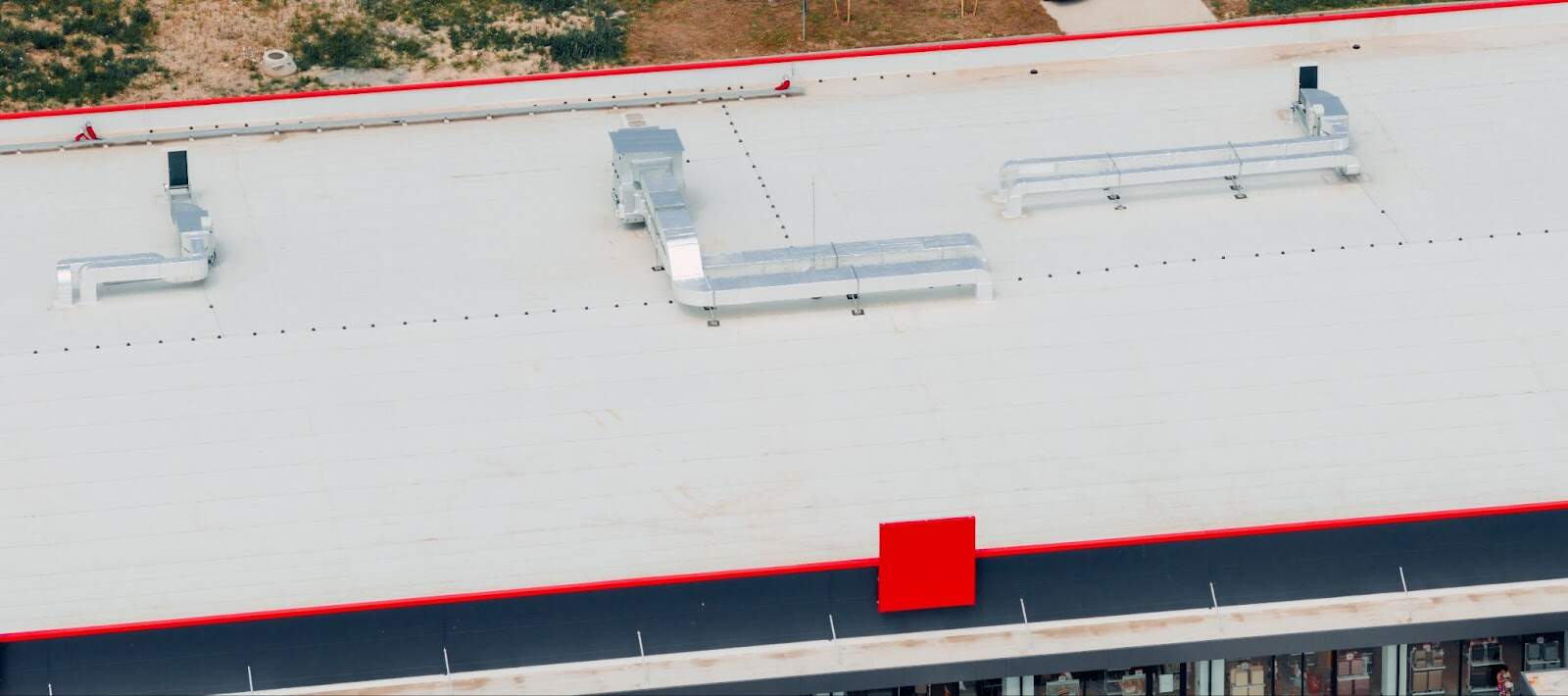
- Roof Size and Configuration: A larger roof will constitute more materials and labor. A complex roof with penetrations, HVAC units, skylights, or other angles requires more precision than a flat surface for a clean roof installation.
- Materials Cost: This is one of the largest considerations in roof replacement costs. Certain materials like TPO and EPDM tend to be more affordable, while modified bitumen or metal roofing can be costly. Their long-term benefits should play a large role in deciding what durable roofing material to use.
- Environmental Goals: Commercial buildings with environmental initiatives or in urban areas may consider roofing systems that provide reflective benefits to lower cooling costs and support greener installation.
- Drainage: Roofs in climates with heavy rainfall or other precipitation must consider an effective drainage system to prevent leaks or standing water. Installing complex drainage and insulation systems can increase labor costs and downtime.
The best way to get a picture of your roof’s replacement cost is to consult a professional roofing contractor. Once you understand what factors can impact your budget, you can get a replacement estimate that actually reflects your building’s needs and plan accordingly.
Repair vs. Replacement: How to Decide What is Right For Your Roof
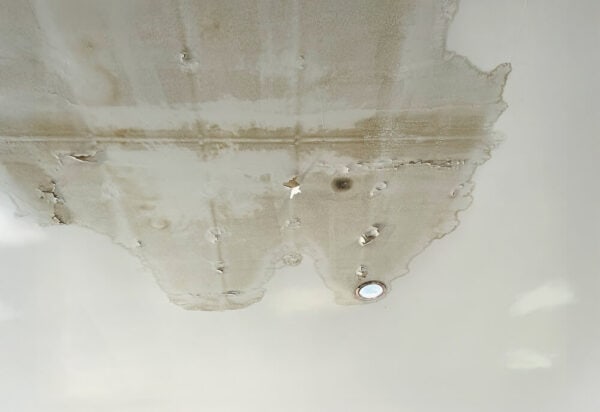
When damage affects a commercial property, most building owners ask whether repair or replacement is the best approach for their roof. The answer isn’t always obvious, because both repairs and replacements can provide valid solutions.
If damage is limited to a specific area, and the rest of the roof is in good condition, a small repair is likely the best option. A singular seam failure or puncture does not require a full roof replacement. If your roof experiences damage once or twice a year, a simple repair can provide a reasonable solution. Consulting a professional roofer and providing regular maintenance can effectively treat the damage and add meaningful life to a roof that still has years left in it.
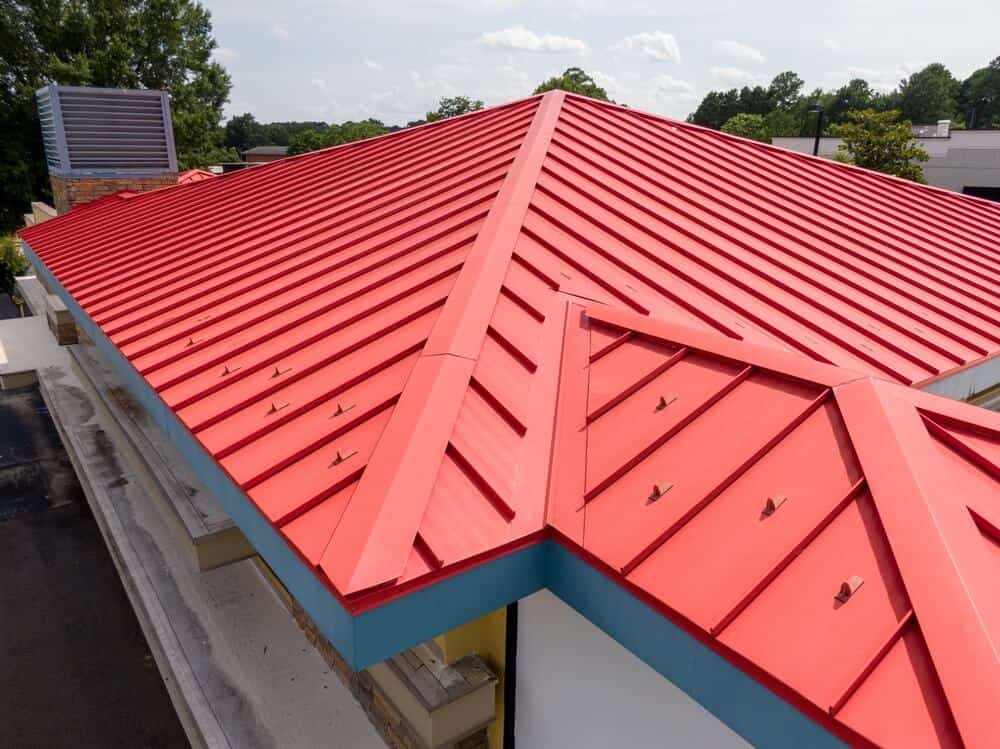
When repairs become a recurring issue, it may be time to consider a larger replacement. If the same few problem areas keep presenting issues or a singular repair doesn’t fix an issue, you’re likely managing a system that’s failing broadly. Continued repairs may cost you more than a full replacement would. It’s also important to consider long-term maintenance and lifespan goals for your roof. Certain materials, such as metal roofing, can last over 30 years. If this aligns with your commercial needs, making the switch from old roofing materials may be the optimal solution.
These are important considerations to evaluate. A common rule of thumb is to replace the roof if repair costs exceed 30% of the price of a new one. Installation costs, downtime, square footage, and paused operations all contribute to roof replacement costs. Removing old shingles and underlayment is common in roof replacement for proper inspection.
There is no universal answer. The best way to decide if a roof replacement is the right option for your roof is to get a professional opinion from a trusted roofing contractor. When you have a clear picture of your roof’s condition, the decision usually comes easier.
Next Steps For Commercial Roof Replacement
After you gain a deeper understanding of your commercial roof’s condition, the next step is moving towards installation.
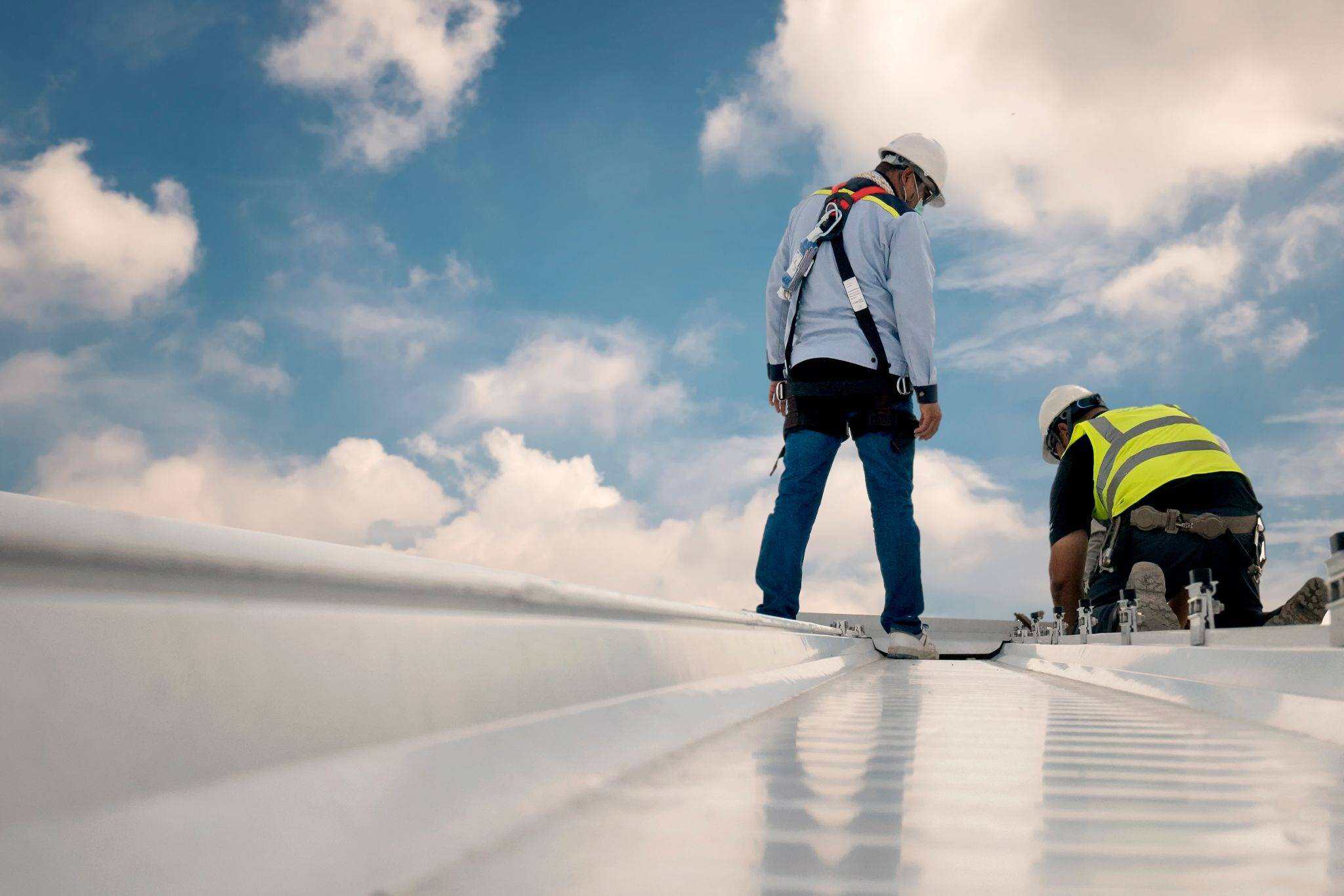
It’s important to have a contractor perform a full roof inspection. An inspection looks at more than the surface. It checks how water moves across the roof, what condition the underlying layers are in, and whether the issues you’re seeing are connected or isolated events.
The answer may be to tear off the previous roof and install a new, durable system aligned with your environment, budget, and lifetime goals. In some cases, a partial replacement can provide the solution only one section of your roof needs. Or, a few simple repairs may be all you need.
A roof replacement involves balancing material choice, contractor selection, and unforeseen structural repairs to ensure long-term protection. When selecting a roofing contractor to work with, it’s important to vet all contractors to ensure quality and reliability. Compliance with local building codes, including fire ratings, is essential in roofing projects. Make sure to discuss local permits and warranty details before signing to ensure you and your contractor understand coverage and responsibilities.
Once your roof is inspected and you know what you’re working with, you’re no longer guessing. You can take active steps towards a roof that serves your commercial needs.
Get a Roof Replacement Assessment From AAA Roofing
Whether you’re questioning whether it’s time for a roof replacement, or you are seeking the right contractor to get the process started, AAA Roofing can help.
With 37 years of experience and a reputation as a trusted roofing contractor, AAA Roofing provides dependable service in commercial roof replacements, giving you confidence that your projects are in the hands of professionals. AAA Roofing works with commercial properties to evaluate the existing roof, from surface damage to interior structural failures. From there, you can make an informed decision that aligns with the needs of your commercial roof.